Solar Regatta Spring 2026
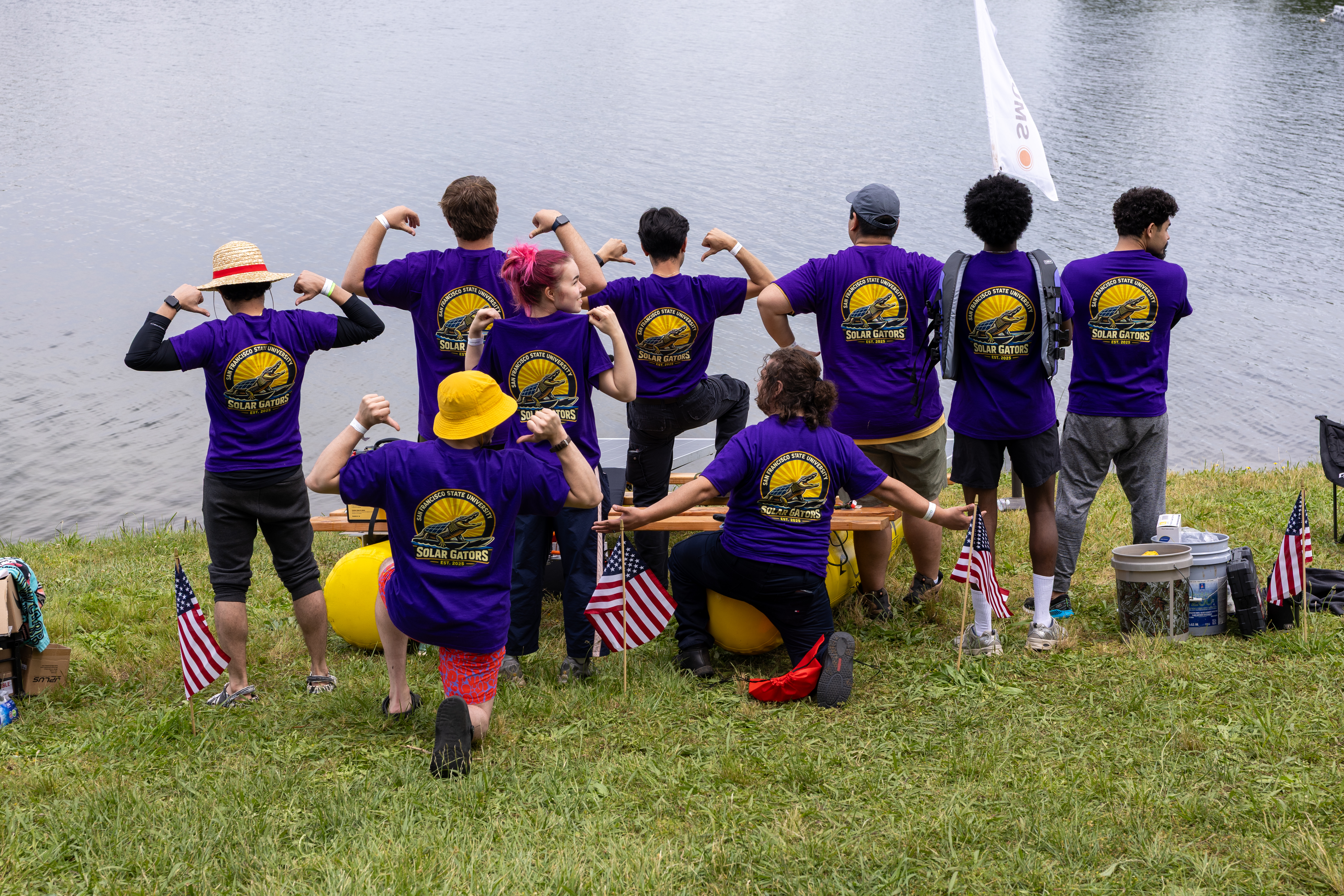
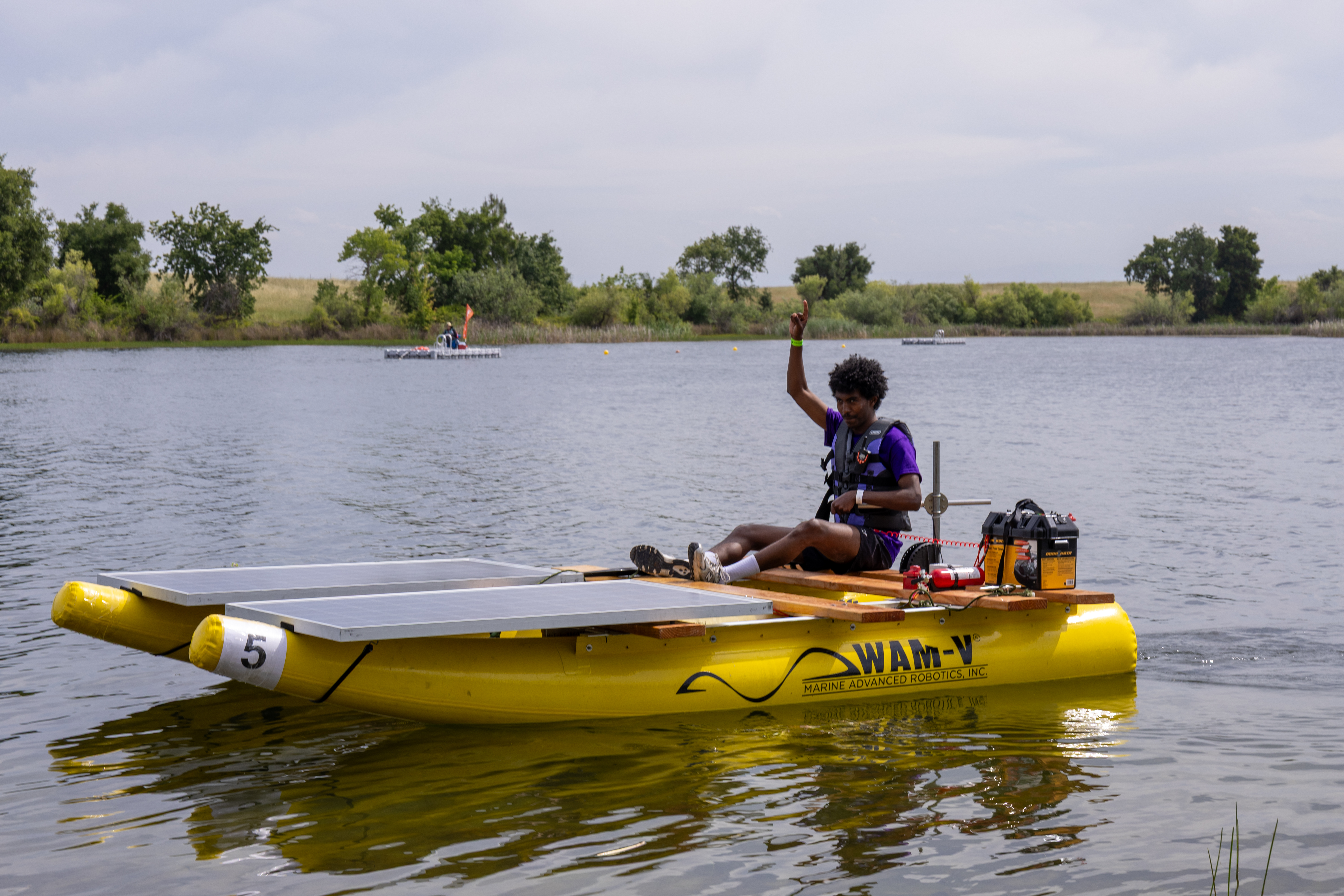
On Saturday, May 2, 2026, a group of engineers from San Francisco State University, called the Solar Gators, went to Rancho Seco Park to participate in the annual competition, the California Solar Regatta. Hosted by Sacramento Municipal Utility District (SMUD), to promote sustainable energy via a series of tests where solar and battery-powered boats compete, some of the competitions include slalom, sprint, and endurance.
However, this is a story that must be told from the beginning. This all started in 2025, when we participated in the competition for the first time, and this, more than anything, laid the foundation that made it possible to compete again. It is thanks to people like Bianca Herrera and Mathieu DePaul that we are where were standing today. New students stepped up to the role, including Anthony Delacruz, the new CEO, and Diego Rey, the new CTO, bringing fresh ideas to the team with the advice and guidance of Dr. Zhuwei Qin, Josh Mehlman, and the kind donation of Chris Kohlhardt.
With them came a new set of students: Alonzo Turner, Manuel Paredes, Kseniya Khamushkina, Zach Blanchard, Jacob Jiao, Jariel Feliciano, and Eyoel Kassie. Having this many people was a significant increase over the four who participated in 2025 and yielded beneficial results, as shown in the video promoting the team.
But as in every good story, several challenges were overcome, including a leadership transition, managing the new team, and the budget. As Diego Rey, the CTO, shared,
“Great leadership begins with seeing people clearly, recognizing the unique strengths each person brings, and building the conditions where those strengths can improve. Not only that, but my role is to move forward the foundation that's been built while pushing toward what's next.”
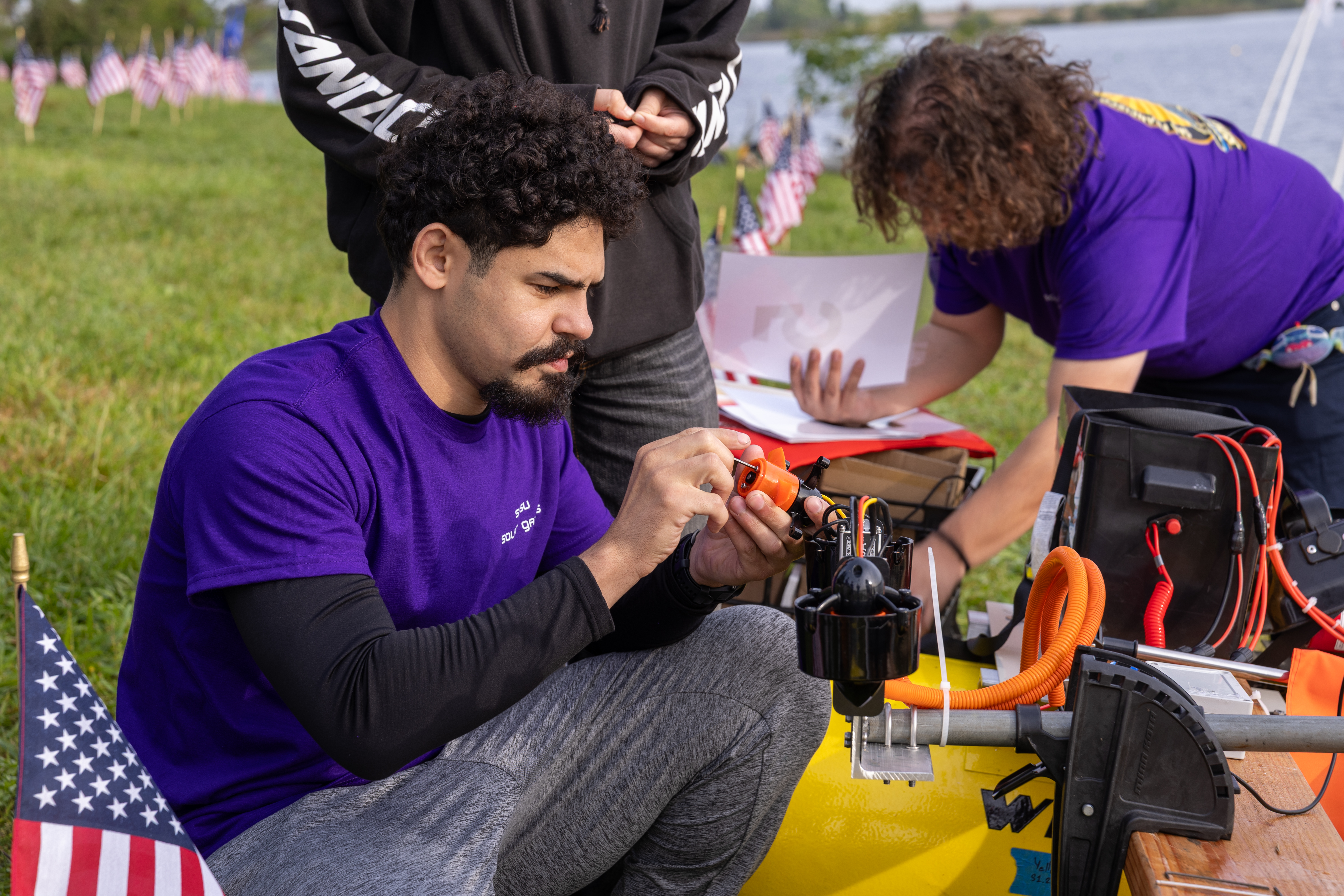
While we had a foundation, a lot of work was needed to make it solid, which is why several improvements were made, such as better materials, redoing the mounting to make it easier to build and unbuild, doubling the thrust, and adding new batteries, among others.
Just acquiring the parts was a challenge, and we found ourselves near race day without having tested the boat and all the new components. A week full of midterms, engineering presentations, and race day caught up with the team, but thanks to its resilience, everybody put everything they had into getting the boat running for testing on Friday, May 1st.
The sea trials yielded some outcomes we didn’t expect; however, this further proved the strength of our team, as we all realized we needed some rest before we could find a solution to the problem.
We spent the night in Rancho Seco camping with the team, a night full of laughs and stories, with the company of s’mores and hot dogs, but more importantly, a bonding experience for the whole team, bound by the hard work that only an engineering project can give you.
Then came race day, and after some good rest, the team collaborator, Josh, had found what might have caused problems. We implemented the solution, and before we could test, we had the first race, and to our happiness, it did. It worked so well that we were one of the few teams that completed the slalom in solar (which is why we had to redo it, as the organizers changed the rules to complete this competition in battery).
This race will forever be in the memories of those who participated, as it was full of chaos, but, above all, an experience only this type of competition can offer. Completing inspection, technical questions, and presenting for the judges on top of the competitions themselves.
We got 3rd place in two out 3 competitions, which wasn’t enough to win a trophy. However, the experience gained can’t be compared, as the aim of this project is not only to compete but also to give students a chance to apply what they learn in class to real-life scenarios. Skills like problem-solving, a creative mindset, and teamwork can only be developed and demonstrated through these school projects. As Anthony Delacruz, the CEO, stated:
“The Solar Gators are more than a competition team. We are proof that when students are given the opportunity to build, fail, learn, and try again, they can create something that lasts beyond a single race day.”
One of the objectives of this project is to continue throughout the years so that students in the present and future can continue to enjoy this experience, and a personal objective of this year’s team (in addition to winning trophies) is to one day be the giants that future students can stand on, just as past students have done for us.
From the team, huge thanks to the machine shop in the Science and Engineering Innovation Center, Mathematics, Engineering, Science Achievement (MESA), and the College of Science and Engineering for their help; without it, this wouldn't be possible.